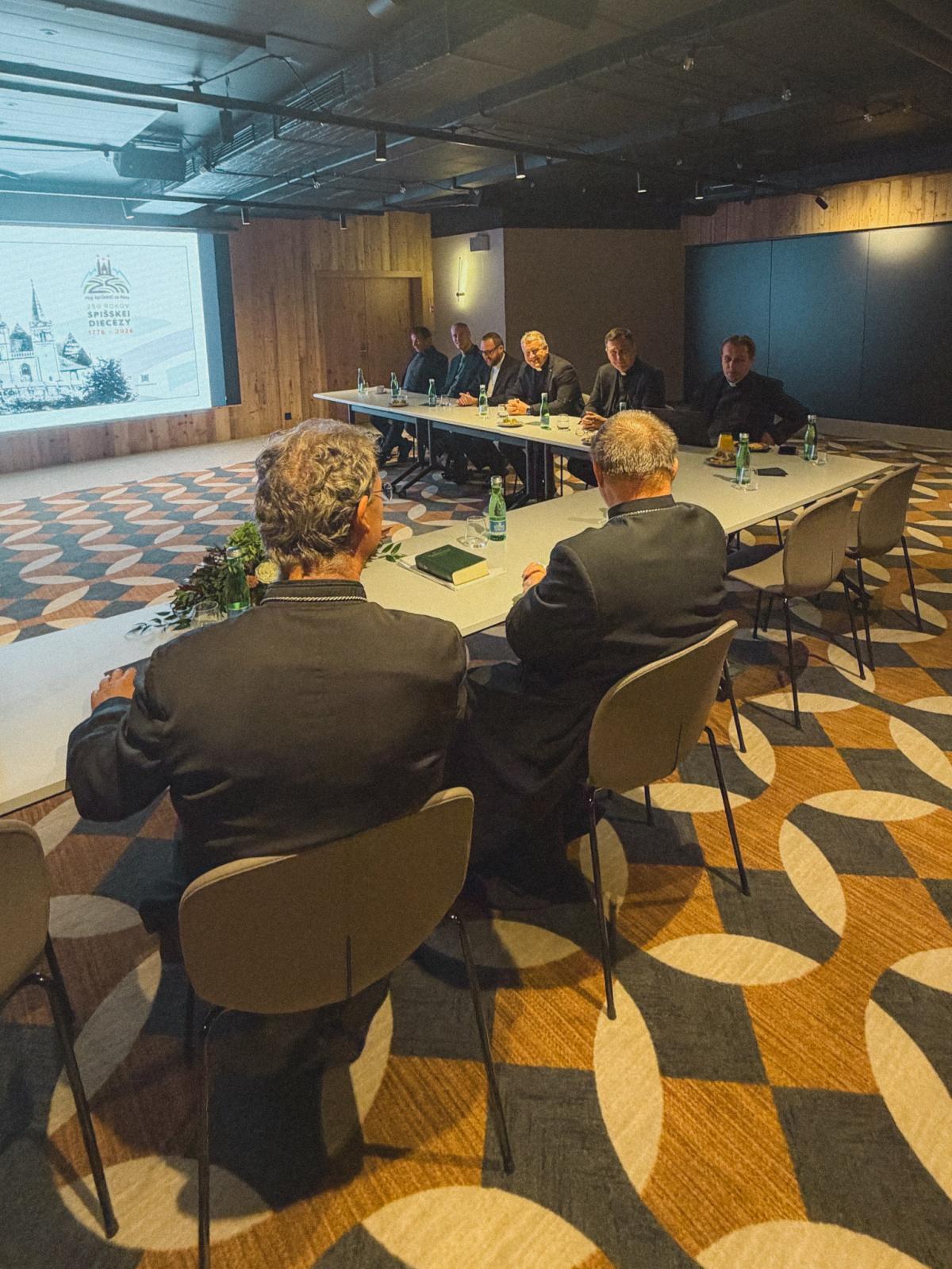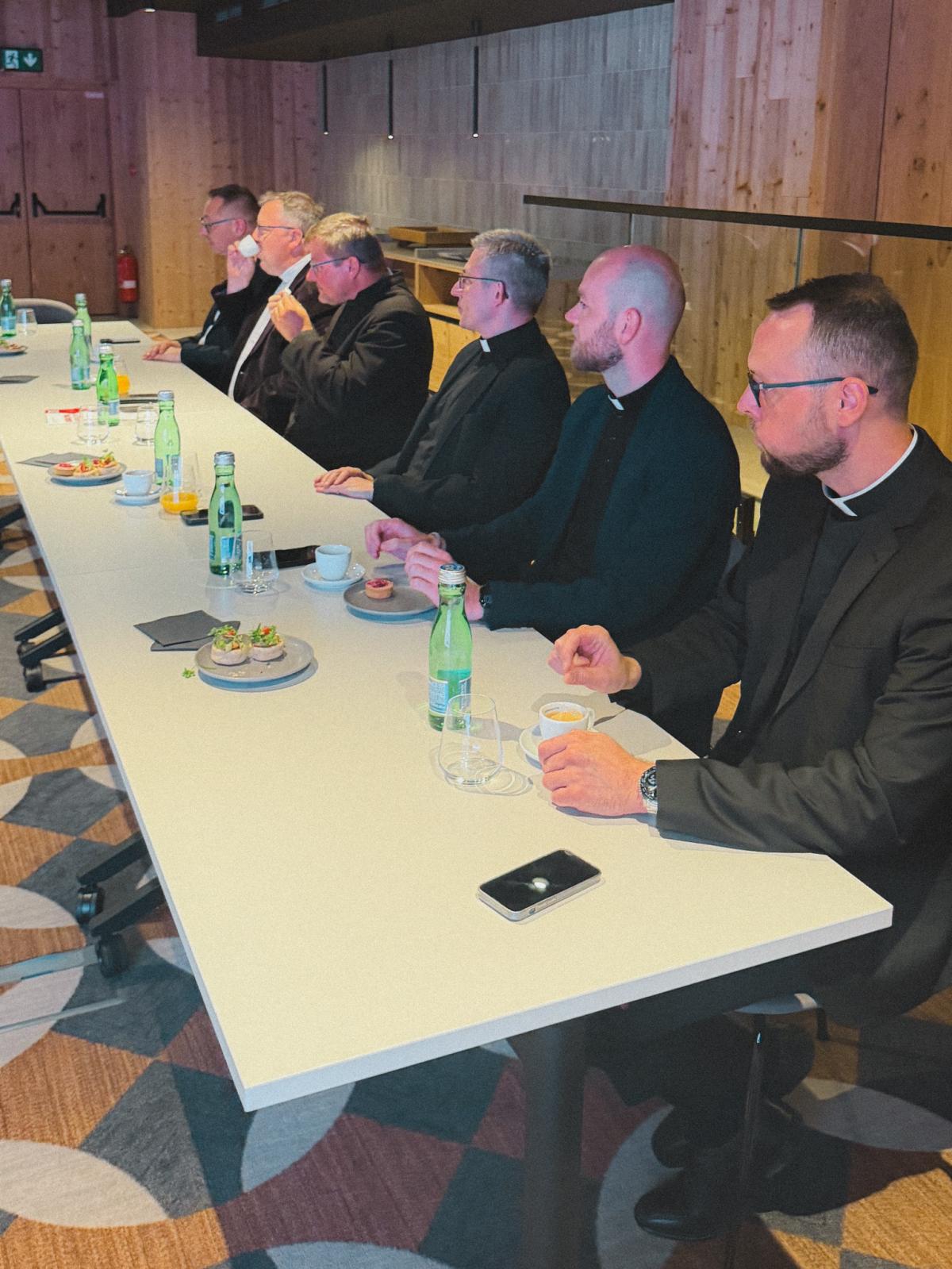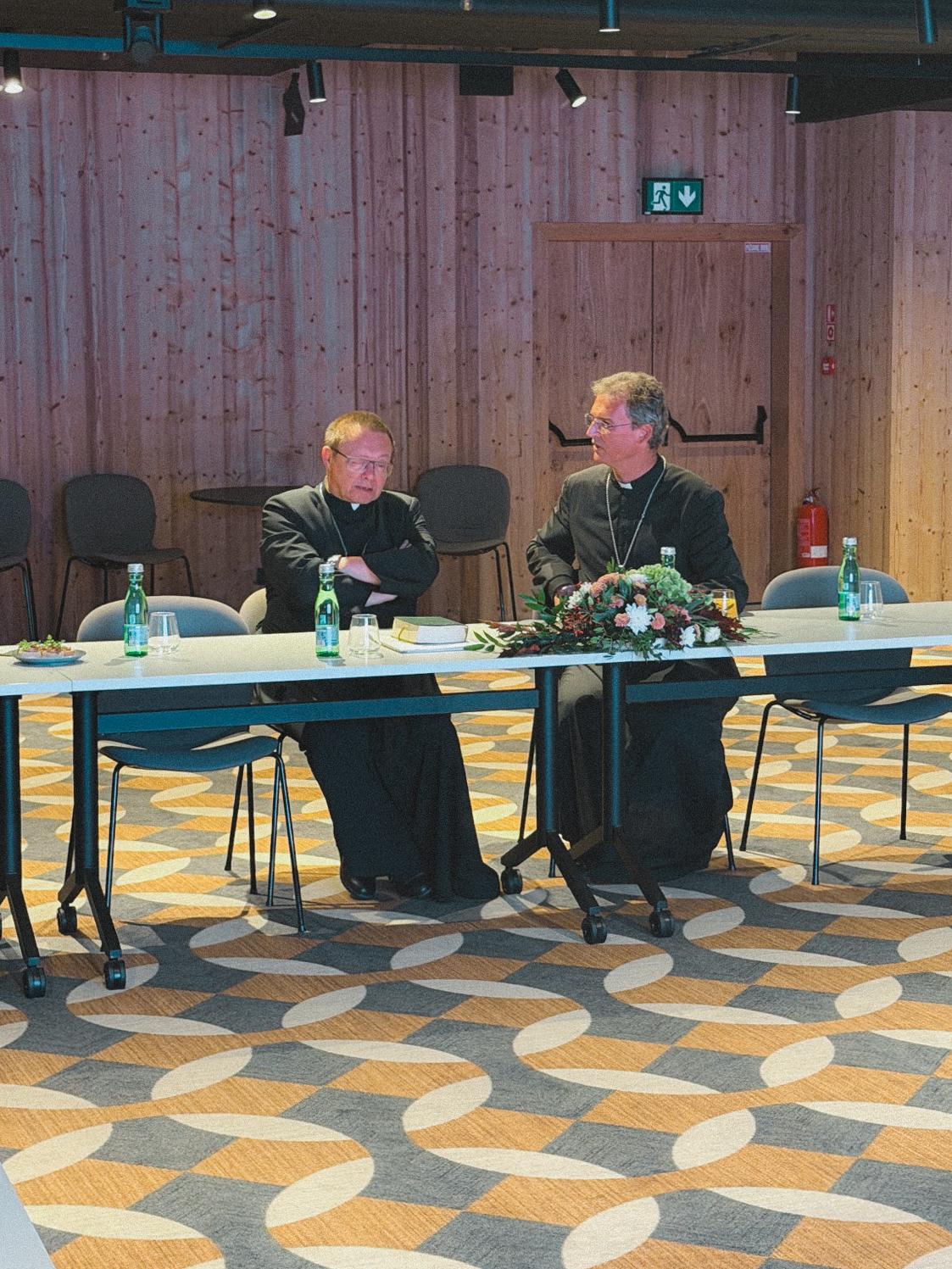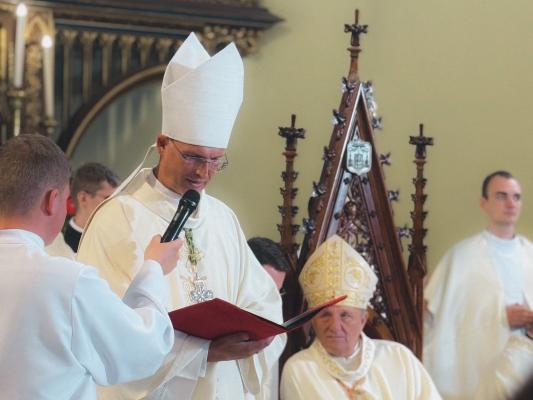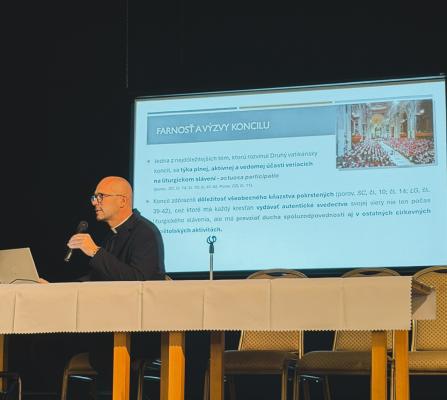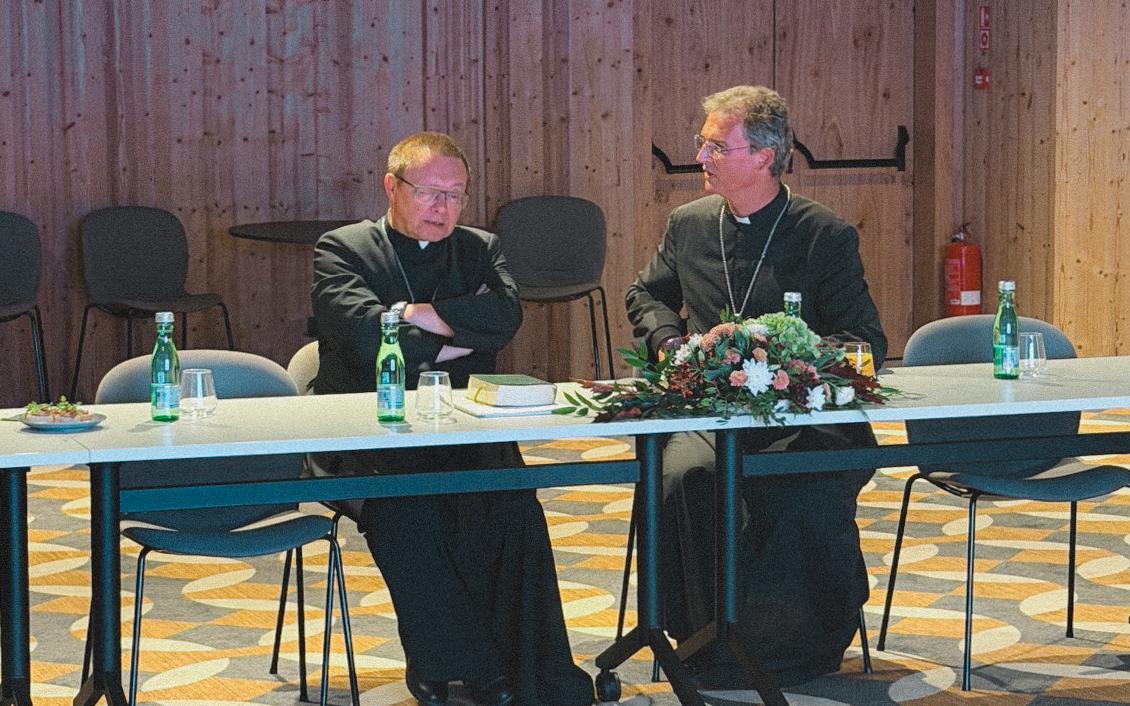
In his address, the Cardinal emphasized that synodality is not an end in itself, but a way of life for the Church that is meant to serve evangelization. He spoke about the fundamental dignity of every baptized person, charisms and ministries in the Church, the liturgy as an image of synodal communion, fidelity to the Second Vatican Council, as well as the need for personal and relational conversion.
1. The Goal Is Not Synodality, but Evangelization
One of the first and most striking ideas expressed during the meeting was stated very clearly: the goal is not synodality; the goal is evangelization. Synodality is not meant to be another project, an administrative process, or a new ecclesial structure. It is the way in which the Church is called to live out her mission and to discern together what the Holy Spirit is asking of her at a particular moment.
The Cardinal emphasized that it is always the Church as a community that evangelizes. Evangelization, therefore, is not merely the work of individuals, however capable, gifted, or active they may be. The most powerful witness is a community of people who are able to walk together, share responsibility, listen to one another, and complement one another.
This is precisely why division is one of the greatest risks facing the Church. Where community breaks down and individual ministries or groups stand against one another, the credibility of the Gospel witness is weakened. The Church is called to demonstrate that unity is possible even among people who are different. Synodality, therefore, does not seek to make everyone the same. On the contrary, it takes into account the diversity of gifts, vocations, ministries, and experiences. Its task is to help ensure that this diversity does not lead to division, but to communion and a shared mission.
2. The Fundamental Dignity of Every Baptized Person
The Cardinal devoted particular attention to the question of Baptism. He recalled that the fundamental dignity of every person in the Church stems precisely from Baptism. Before someone is a bishop, priest, deacon, religious, or lay person entrusted with a particular ministry, he or she is a baptized person who has been given a share in the life of Christ and in the mission of the Church.
In this context, he posed a very concrete question: we can describe fairly precisely what a bishop, dean, parish priest, or another person entrusted with a particular ministry does in the Church. But can we say just as clearly what a baptized person is called to do in the Church precisely because he or she is baptized? What is that person's place? What is their responsibility? What gift do they bring to the community?
A synodal Church must take this question seriously. Not in order to abolish the differences between individual ministries or weaken the mission of ordained ministers, but so that the dignity and co-responsibility of the entire People of God may be fully expressed. The Cardinal also pointed out that in a synodal Church there should be no person who does everything. Even if someone were capable of doing so, it would not be wise. The Holy Spirit does not work through only one person. He distributes His gifts among many, and everyone is called to discern how they can serve the common good.
The point, therefore, is not that everyone should do whatever they want, nor that everyone should determine their own place in the Church. Rather, it is about discerning the gifts and vocation one has received and placing them at the service of the community.
3. The Church as a Community of Diverse Gifts
According to the Cardinal, synodality is closely connected with the ability to see the Church as a community of different charisms, ministries, and responsibilities. The unity of the Church does not arise from everyone doing the same thing. It arises when each person faithfully carries out what they are called to do while respecting the vocation and ministry of others.
Understood in this way, the Church does not function according to a model in which one person decides, one person acts, and everyone else merely receives. It is a community in which everyone bears an appropriate share of responsibility and where there is room for discernment, listening, and cooperation.
The Cardinal thus pointed to an important change in mentality. Synodality is not merely a matter of organizational efficiency. It is not a way of distributing tasks simply so that there is less work to do. It is a spiritual way of living as the Church, rooted in the conviction that the Holy Spirit can speak and act through different members of one community.
This logic should also be reflected in the concrete structures of the Church. It is not enough simply to have councils, teams, commissions, or various forms of cooperation. What matters is whether these structures genuinely make room for listening, discernment, and co-responsibility.
4. The Liturgy as an Image of the Synodal Church
One of the most interesting themes of the meeting was the connection between synodality and the liturgy. The Cardinal explained that the liturgy provides a particularly clear illustration of what synodality should look like.
He posed the question: Who celebrates the liturgy—the priest or the community? The answer is the entire assembled community. The priest has his own indispensable ministry within the liturgy, but the liturgy is not his individual performance. It is the action of the whole Body of Christ.
Here we can see very clearly the principle that each person should do all of, but only, those parts which pertain to their ministry. Active participation does not mean that everyone does everything. It means that each person faithfully fulfills their own place and ministry within the one celebration.
The Cardinal illustrated this with the example of a permanent deacon. A deacon cannot perform what is entrusted to the priest, such as celebrating the Eucharist. At the same time, he cannot be denied what properly belongs to his ministry, such as proclaiming the Gospel in the liturgy. It is not enough to say in theory that someone has a particular ministry or right if, in practice, we do not allow that person to exercise it.
The liturgy therefore demonstrates in a very concrete way whether our understanding of the Church is truly synodal. It reveals whether we are able to respect the diversity of ministries, whether we can accept that everyone has their own place, and whether we understand that communal celebration is not the individual performance of one person.
5. Ars Celebrandi Concerns the Entire Community
In this context, the Cardinal also referred to the concept of ars celebrandi—the art of celebrating the liturgy. He emphasized that this is not merely a question of how the priest celebrates. Ars celebrandi concerns the entire liturgical assembly.
Every member of the community is part of the celebration and, through their posture, ministry, responses, singing, listening, and prayer, contributes to the liturgical celebration. This is also why the liturgy is such an important place for forming a synodal mindset.
The Cardinal emphasized that any discussion of synodality is necessarily connected with the liturgy, because the liturgy reveals whether we truly live as a community or whether we remain attached to an individualized understanding of the Church. The liturgy is, in this sense, a kind of mirror of ecclesial life. If we are unable to respect one another and embrace the diversity of ministries within the liturgy, this will also become a problem in the broader life of the Church.
6. Fidelity to the Second Vatican Council and the Liturgical Reform
The Cardinal also placed the question of synodality within the broader context of the Second Vatican Council. He emphasized that what we speak of today as a synodal Church is not something that emerged without connection to the Church's previous development. It is deeply rooted in the ecclesiology of the Second Vatican Council.
The Church is therefore invited to a twofold fidelity: fidelity to the Council and fidelity to the liturgical reform that grew out of it.
In this context, the Cardinal critically addressed two tendencies that he considers mistaken: on the one hand, attempts to “reform the reform” in a way that relativizes the direction of liturgical renewal, and on the other, attempts to return to the pre-conciliar form of the liturgy as an ideal.
According to him, both tendencies are problematic because they overlook the fundamental direction of the conciliar renewal. The Church's fidelity should be expressed neither through nostalgia for the past nor through arbitrary experimentation, but through the faithful reception of what the Church discerned and embraced in the conciliar and post-conciliar renewal.
7. Synodality as a Prophetic Witness to Today's World
The Cardinal also pointed to the broader social dimension of synodality. According to him, a synodal Church can be a prophetic sign for today's world.
Contemporary society faces two significant risks: loneliness and division. Paradoxically, despite technological possibilities for communication and constant connectivity, loneliness is increasing. People may have more ways of staying in contact, yet at the same time they often become increasingly isolated.
The second major problem is division, which takes very concrete forms in wars, conflicts, violence, and polarization. The Cardinal also mentioned the fact that violence is becoming increasingly evident among young people and often comes from their peers.
In such a situation, the Church has a particular mission to demonstrate that communion is possible. Synodality should bear witness to the fact that people can be different and yet remain united. This is also one of the prophetic dimensions of synodality: to tell the world that difference does not have to lead to hostility and that unity does not have to mean uniformity.
8. Unity in Diversity, Not Uniformity
The Cardinal repeatedly emphasized that synodality must not be understood as an attempt to create a uniform Church in which everyone thinks alike and acts in the same way.
On the contrary, synodality takes into account the plurality of vocations, gifts, and life experiences. The unity of the Church consists in a shared direction and a common foundation of faith, not in eliminating all differences.
It is therefore important for the Church to learn to live with differences without allowing them to become a source of conflict. Synodality means being able to walk together even when different perspectives, experiences, or sensitivities exist among us.
It is a culture of dialogue and discernment that requires patience, humility, and an awareness that no one has a monopoly on the work of the Holy Spirit.
9. Not a Reform of Structures, but Conversion
One of the key ideas expressed in the concluding part of the meeting was that synodality is not primarily a reform of structures, but a conversion of the person.
According to the Cardinal, the Church already has many structures that enable cooperation, shared decision-making, and co-responsibility. The problem sometimes lies in the fact that we either fail to use these structures or use them in a way that does not correspond to their true purpose.
We may have pastoral councils, presbyteral councils, finance councils, various commissions, or teams, but if they remain merely formal structures, they will not create synodality by themselves.
What is needed, therefore, is personal and relational conversion. Synodality begins when a person ceases to believe that they must do everything themselves, learns to listen to others, becomes willing to change their attitudes, and is able to recognize the gifts that the Holy Spirit has placed in other people.
Such conversion also affects the way leadership is exercised. Authority in a synodal Church does not mean weakening responsibility, but rather the ability to exercise responsibility through listening, discernment, and service to the community.