Synodality Is Oriented Towards Evangelization and Listening to the Holy Spirit
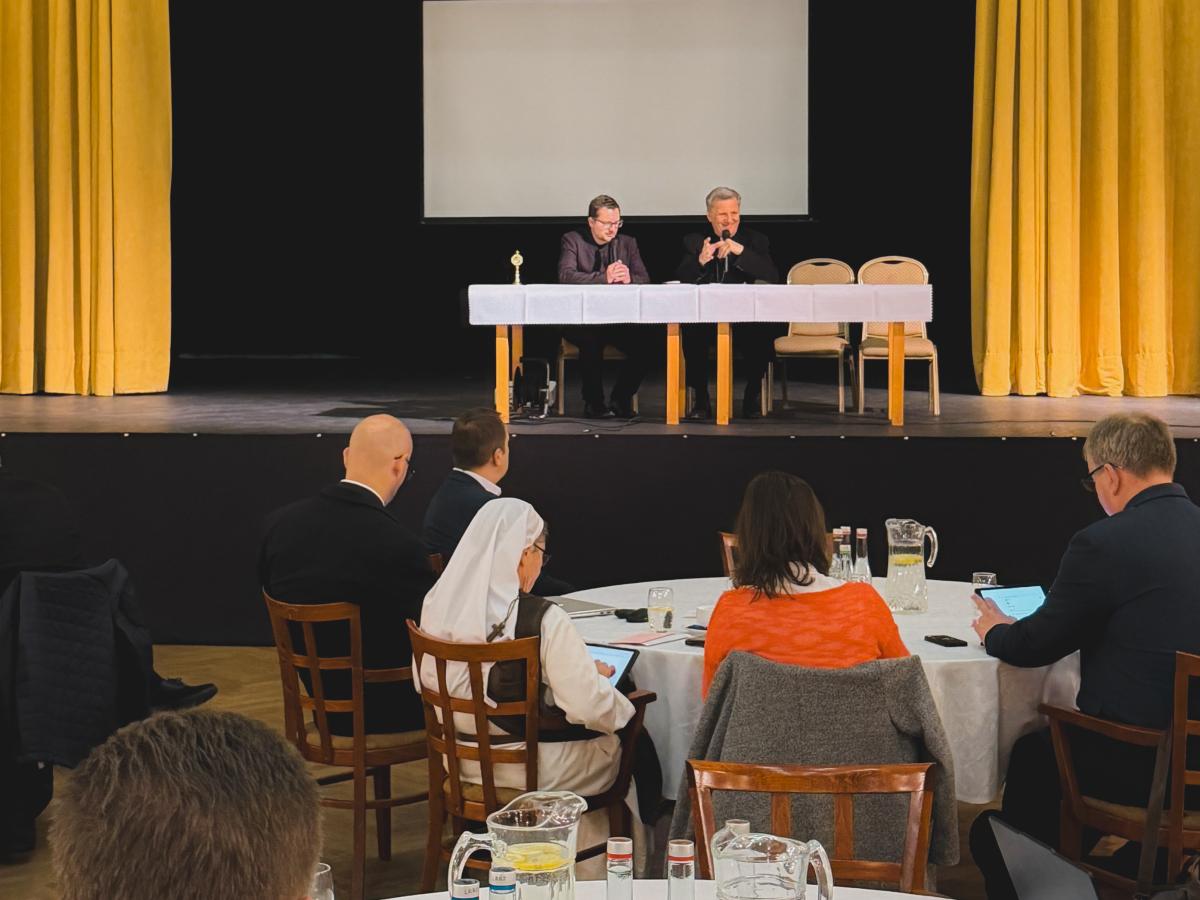
Cardinal Mario Grech emphasized in his address that the first task of synodality is evangelization and the second is listening to the Holy Spirit. Synodality is not an end in itself, but a way of discerning the voice of the Holy Spirit among many voices in the Church and of becoming more effective in proclaiming the Gospel. It also has a prophetic dimension in relation to society, because through its way of walking together, the Church can demonstrate a culture of listening, dialogue and shared responsibility.
Synodality Is Not a Structure or a One-Time Event
Authentic synodality cannot be reduced to a few meetings, celebrations or the creation of certain structures.Synodality is not a one-time event, but a process and, above all, an attitude of the heart. Synods, councils and assemblies may take place, and yet we may still not be living synodally. The mere existence of structures does not guarantee a synodal way of thinking and acting. A bishop may have all the pastoral councils and meet with them regularly, and yet in reality not listen to them and make decisions entirely on his own. The same can happen to a parish priest or to lay people. Outwardly, everything may appear synodal, while in reality an autocratic or individualistic way of acting may remain.
Pope Leo XIV encourages the Church to understand synodality as a process and to make it an attitude of the heart. The Cardinal recalled that the Holy Father has a synodal heart and invites the Church to embrace the synodal way of life ever more deeply. Holding a synod in itself does not yet mean synodality. It is an inner style expressed through listening, discernment, openness and a willingness to be guided by the Holy Spirit.
The Common Journey Has Its Foundation in the Trinity
Synodality has a profound theological foundation. God is not solitary, but is a communion of the Father, the Son and the Holy Spirit. Therefore, synodality has a Trinitarian character. Where the Holy Spirit is at work, there is movement, life and dynamism. The word synod itself expresses a common journey: syn means “together” and hodos means “way” or “journey.” The Church is the People of God, called together by Christ in the power of the Holy Spirit, walking together and proclaiming the Gospel together.
Renewal of Mentality and Relationships in the Church
Our task is not to create a new Church, but to renew the Church. The synodal style is therefore not a cosmetic adjustment, but a renewal of mentality and relationships. Walking together is not easy, because there is also a danger within the Church of individualism, closing ourselves off within our own ideas and adopting the attitude: “We have always done it this way.” Synodality, on the other hand, presupposes a willingness to be challenged, to listen, to discern and to seek new paths that the Holy Spirit opens.
Our task is to evangelize while respecting the gifts and ministries that the Holy Spirit gives to men and women in the Church. Proclaiming the Gospel is not the mission of the clergy alone, but of the entire People of God. Every baptized person has their place, their gift and their responsibility for the life and mission of the Church.
Synodality Is Not Democracy
The Cardinal also emphasized that synodality is not democracy. The Church is neither a parliament nor a place where the majority fights against the minority. Even when voting is used in certain cases, the goal of synodal discernment is above all to arrive at consensus in Christ – at a common recognition of what the Holy Spirit is saying to the Church.
Each local Church has its own environment, culture and history. The Diocese of Spiš is different from a diocese in Brazil or Africa. Therefore, solutions cannot simply be mechanically adopted from elsewhere. The task of each local Church is to bring the Gospel into the particular culture, society and circumstances in which it lives.
Different Gifts, One Harmony
To explain the diversity of gifts in the Church, the Cardinal used the image of an orchestra. In an orchestra, there are different instruments, and each has its own voice. The goal, however, is not for everyone to play the same note, but for different voices to create harmony. Similarly, in the Church, each person must discern their place, their gift and their particularity. The task of synodality is to help different voices, charisms and ministries enter into the harmony created by the Holy Spirit.
Synodality, therefore, is not a handbook of rules that must be followed mechanically. It is a style of being Church, and creativity is also part of it. It means being able, in concrete circumstances, to seek faithful yet new ways of living and handing on the Gospel.
The Dignity of the Baptized and the Sensus Fidei
A particular topic was the dignity of every believer, which comes from the Sacrament of Baptism. When we speak of the People of God, we speak of all the baptized. Despite the differences in ministries and responsibilities, we all share the same fundamental dignity. The baptismal priesthood makes every believer a participant in Christ’s prophetic, priestly and kingly mission.
It follows that proclaiming the Gospel is not the task of the clergy alone. The Church cannot be divided into a small group of “professional” proclaimers and others who remain passive recipients. Every baptized person has a missionary vocation. Therefore, we need to rediscover the greatness of the Sacraments of Baptism and Confirmation, while at the same time respecting the gifts and ministries that the Holy Spirit gives to men and women in the Church.
In this context, Cardinal Grech also recalled the concept of sensus fidei. It is not public opinion or simply the sum of the opinions of believers. It is the spiritual sensitivity of the People of God, who through Baptism are open to the action of the Holy Spirit. He recalled the words of St. Hilary of Poitiers: “Sanctiores aures plebis, quam corda sunt sacerdotum” – “The ears of the people are holier than the hearts of priests.” This statement reminds us that the People of God can, in a particular historical situation, preserve the true faith with great sensitivity.
A Synodal and Hierarchical Church
The Church is, in her very nature, both synodal and hierarchical. These two dimensions cannot be set against each other. Synodality does not abolish the authority of the bishop or the hierarchical structure of the Church, but helps authority to be exercised through listening, discernment and communion. In this spirit, the thought of St. Cyprian was also recalled: “The Church is in the bishop and the bishop is in the Church.”
For our priestly life, this gives rise to an important challenge: synodality begins not with the creation of additional structures, but with a change of attitude. It means being able truly to listen, to recognize the gifts of others, to create space for shared responsibility, and at the same time to lead the community in unity with Christ and the Church. It is not about weakening pastoral ministry, but about fulfilling it more deeply.
The Cardinal also recalled the continuation of the synodal process in the universal Church. In 2028, a gathering of representatives of local Churches – priests, consecrated persons and lay people – is being prepared so that it will be possible to listen to the experience and voice of the individual local Churches.
Synodality as a Style of Life of the Church
Synodality, therefore, is not a handbook of rules. It is a style of being Church. It is a journey on which we learn to walk together, to listen together to the Holy Spirit and to share responsibility together for proclaiming the Gospel.